
Stone
Fractures, grain, hardness, color, and translucency affect how a stone can be cut, fitted, and polished.
The materials are a large part of what makes each piece unique. Their history, structure, and natural patterns also affect the way we cut and finish them.
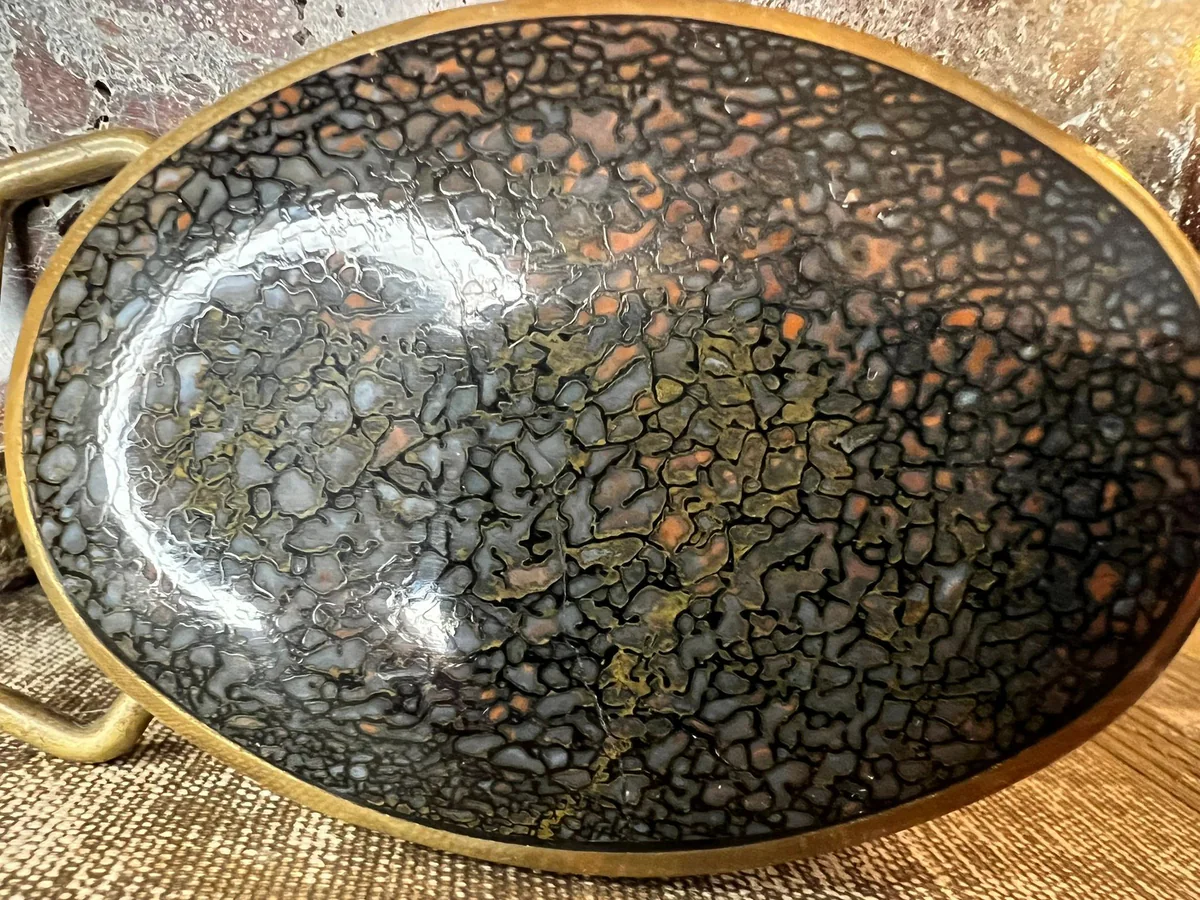
The dinosaur gembone we use comes from the Morrison Formation in the Utah, Colorado, and Wyoming region. The Morrison was deposited during the Late Jurassic, roughly 157 to 150 million years ago, and is well known for its dinosaur fossils.
All of the dinosaur bone used in our work was legally sourced from private land. None of it was collected from federal or other public land.
During fossilization, minerals filled or replaced parts of the original bone and preserved its internal structure. Cutting and polishing can reveal cells, channels, fractures, and changes in color. A cross section may look completely different from a lengthwise cut, so we study the pattern before deciding how to shape the piece.
Mammoth tooth is made of alternating layers of enamel and dentine. Once it is cut and polished, those layers can form loops, bands, and islands of color. The pattern changes throughout the tooth, so no two cuts look exactly the same.
Most of the mammoth tooth we use comes from Siberia. Much of this material is Pleistocene in age, and many examples are tens of thousands of years old. Unless an individual tooth has been scientifically dated, we do not assign it a more exact age.
Because mammoths are extinct, their teeth are a finite, exotic material that can never be produced again. All of the mammoth tooth used in our work is legally sourced before we purchase it, and we retain any available source information that accompanies the material.
Mammoth ivory comes from a tusk and has a different grain and structure. We identify tooth and ivory separately because they are different materials and do not work or look the same. Both can vary in color and stability, so each piece is inspected and stabilized when needed before it is shaped and polished.
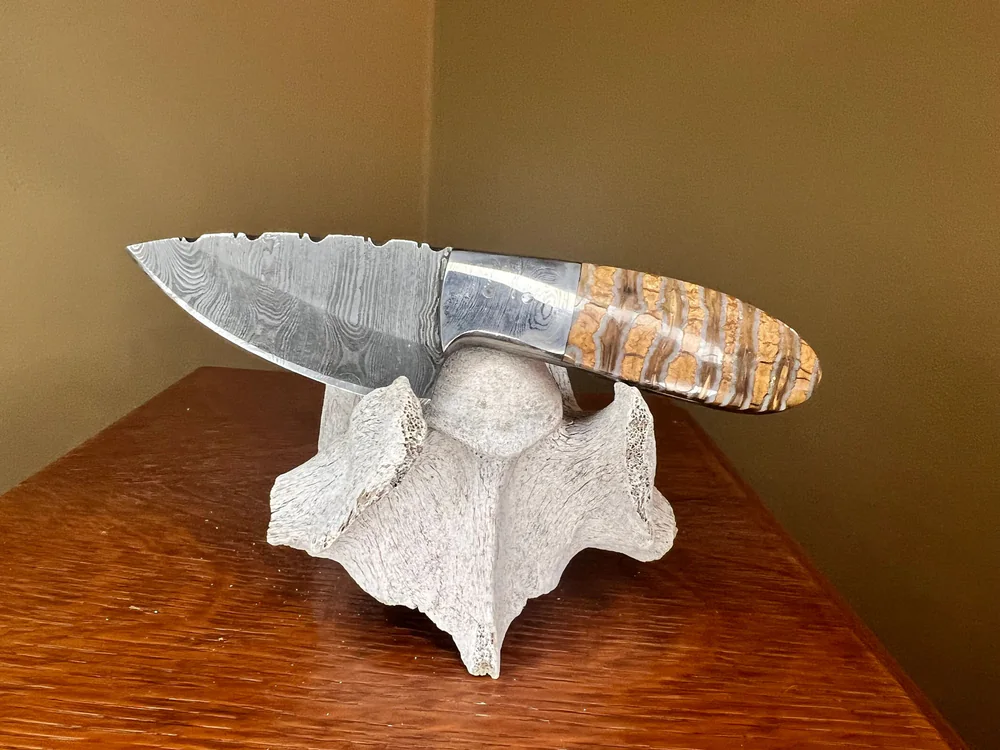
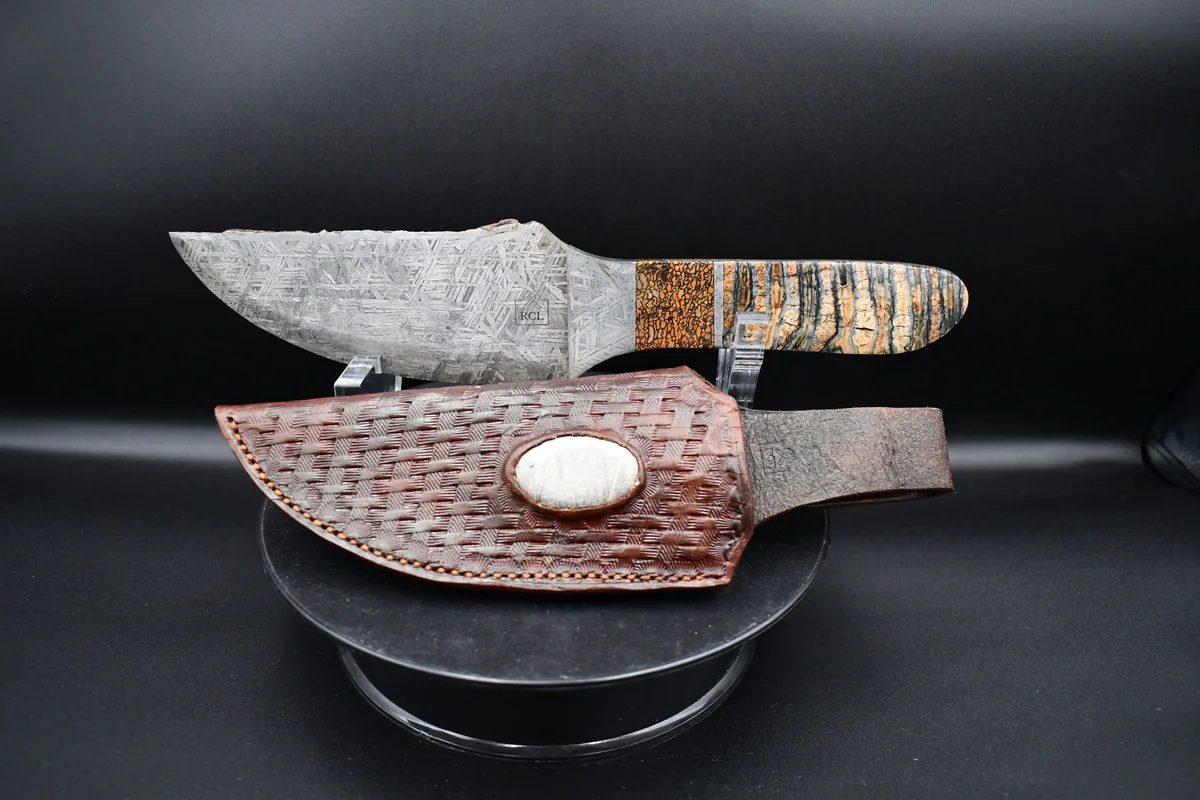
The crossed lines visible in some iron meteorites are called the Widmanstätten pattern. They are formed by intergrown crystals of the nickel-iron minerals kamacite and taenite. The structure developed as molten metal cooled extremely slowly inside the core of an asteroid.
The pattern is usually hidden until the meteorite is cut, polished, and etched. The two minerals react to the etchant at different rates, bringing the crystal structure into view. Not every iron meteorite shows this pattern, but it is one of the best-known features of octahedrite iron meteorites.
This natural pattern cannot be reproduced by ordinary metalworking on Earth. Its scale and spacing reflect cooling over millions of years, far longer than a practical laboratory process. After etching, the surface is neutralized and protected because iron meteorite can rust.
Each material behaves differently, so the cutting, fitting, and finishing methods change from one project to the next.
Fractures, grain, hardness, color, and translucency affect how a stone can be cut, fitted, and polished.
Sheaths and belts are made for fit and use first. Tooling, color, and texture are chosen to complement the finished piece.
Blades, bolsters, liners, pins, and findings affect balance, durability, and the way the lapidary material is framed.
When several materials are combined, we plan the transitions so each one remains distinct and the finished piece feels balanced.
These optional primary educational resources explain the Morrison Formation and the structure visible in etched iron meteorites.
Ask about the pattern, where the material came from, how it was cut, or how to care for the finished piece.